6–8 min
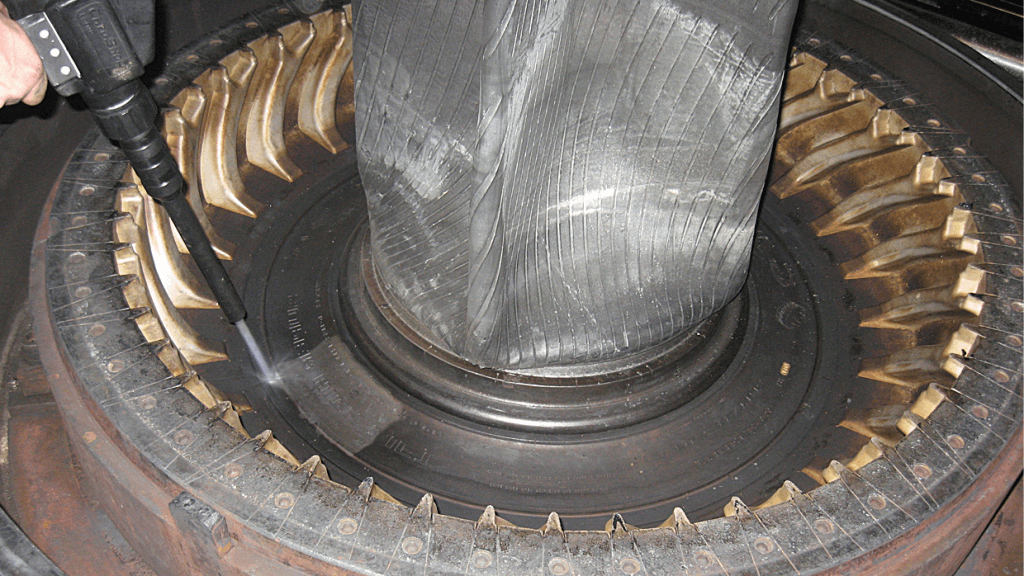
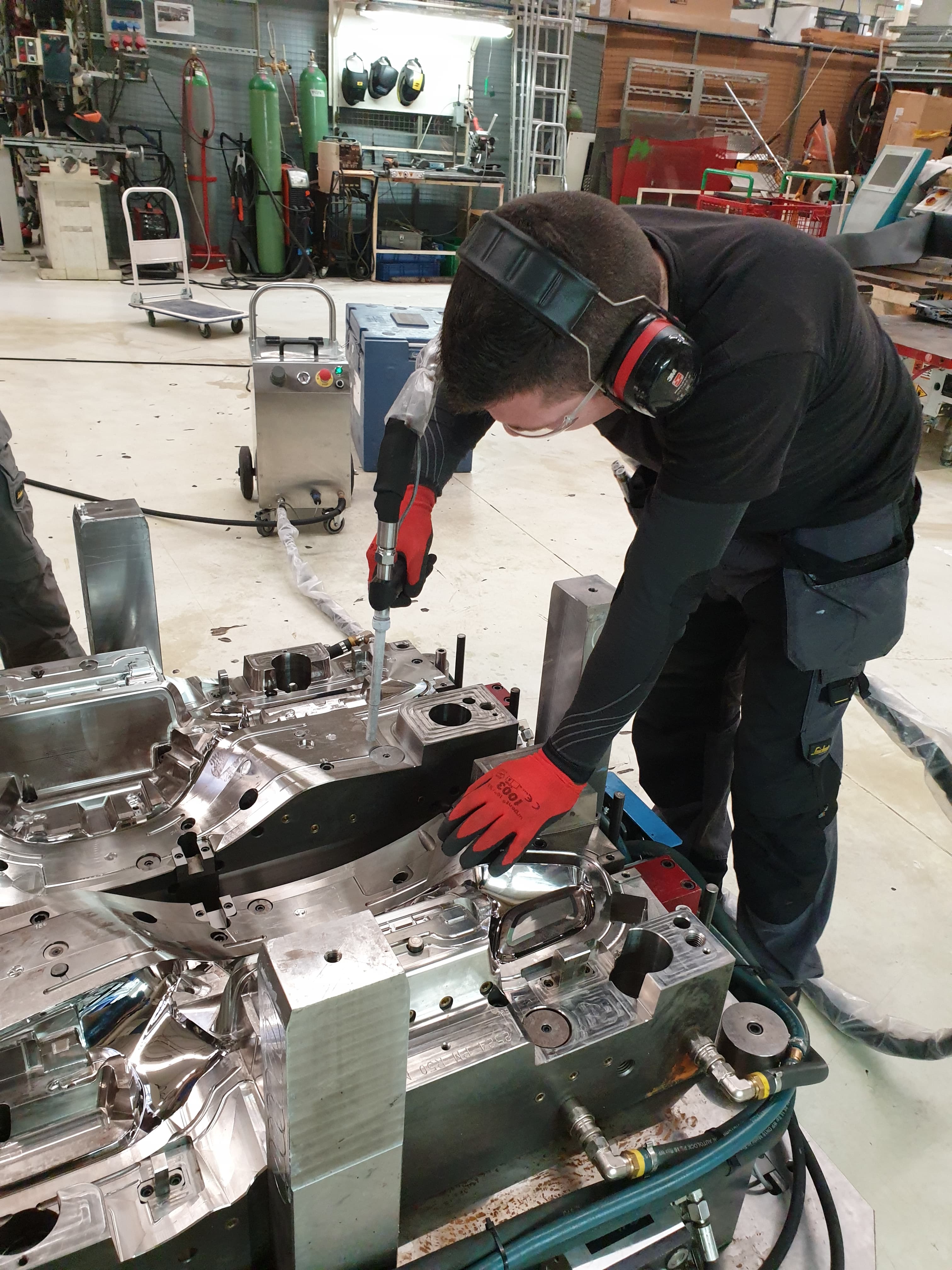
Typical in-press clean
Industry
Restore plugged vents in minutes — no teardown, no reheating.
Spring vents in tire molds (≈0.2–0.3 mm) plug quickly with cured compound and antiozonant. Legacy bead-blasting and scraping can take hours, peen vent edges, and still leave residue in siping and lettering, which drives blisters and surface defects.
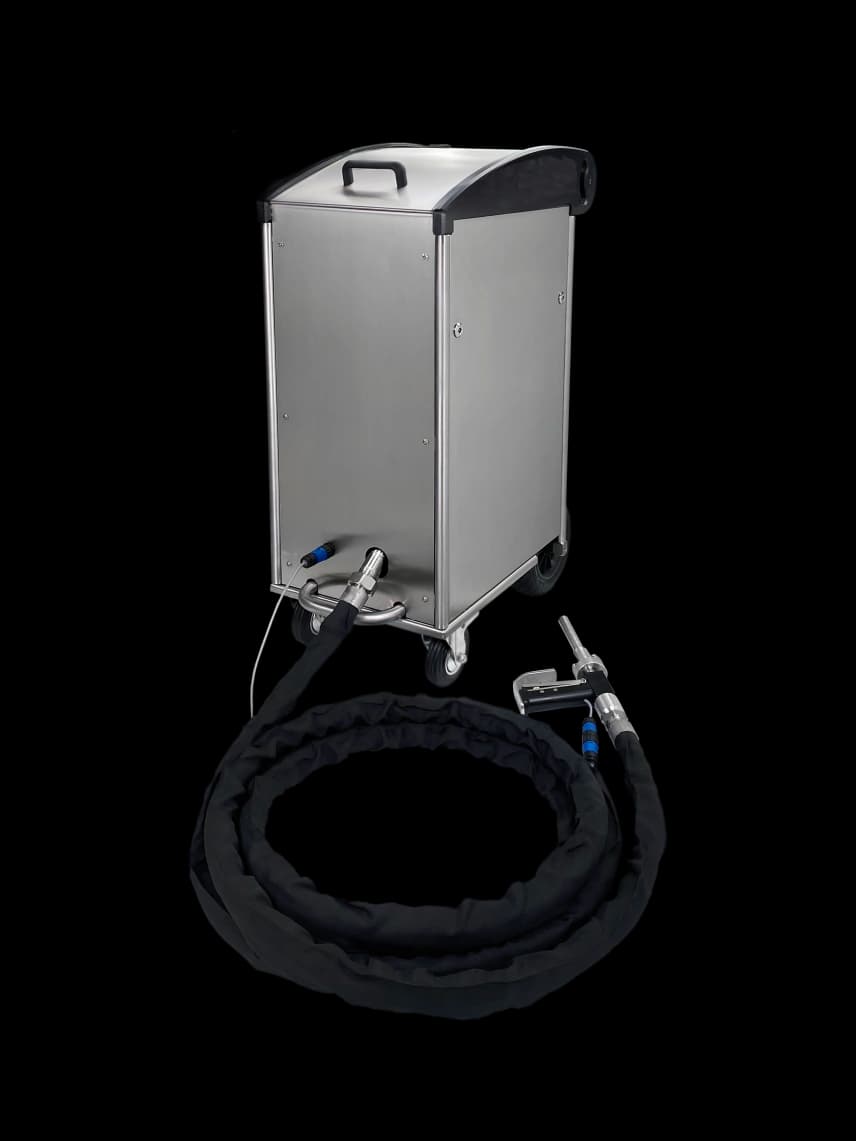
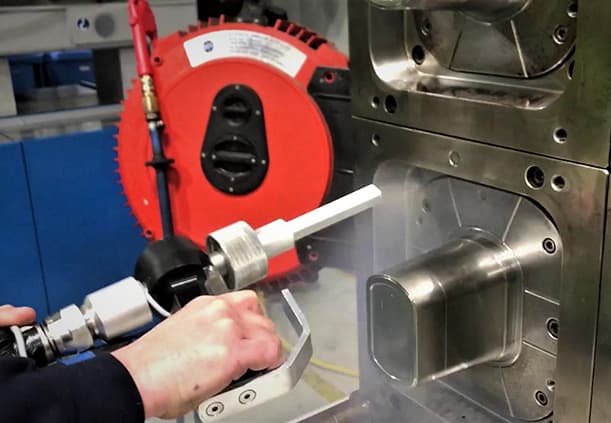
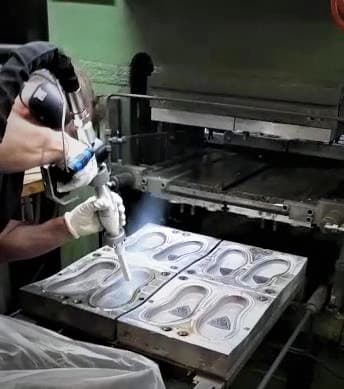
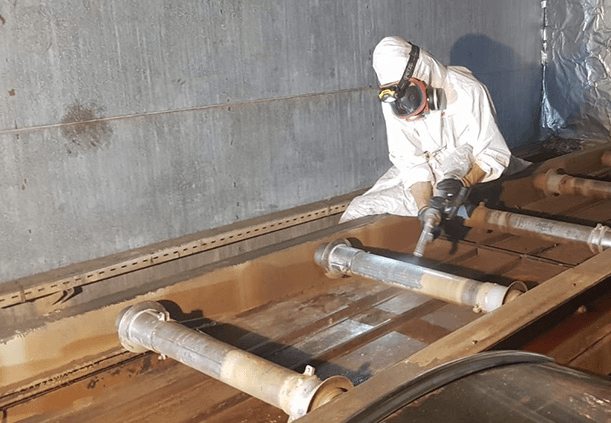
Dry-ice blasting accelerates 3 mm CO₂ pellets to ~300 m/s. On impact they flash-sublimate, creating a micro-thermal shock and acoustic impulse that shear residue from steel or aluminum without abrasion and without secondary media. The process is dry and non-conductive, so molds remain hot and wired.
Cleaning in-press reduces change-over time, preserves vent geometry, and stabilizes airflow. The result is lower scrap, fewer defect callbacks, and higher OEE—while eliminating solvents, wet waste, and the handling risks of teardown and crane transport.
6–8 min
Typical in-press clean
0
Secondary waste produced
2 h
Downtime avoided / change-over
4–6 %
Scrap reduction (blisters/voids)
3×
Vent-hole life extension
$138k/yr
Avg. labor + downtime saved / press
Maintain cure temperature and wiring; restart the press in minutes.
CO₂ (~2 Mohs) avoids peening; preserves 0.25 mm vents and airflow.
Micro-shock removes residue from fine lettering, logos and date codes.
CO₂ vaporizes on impact—no grit, slurry, or wastewater to dispose.
Typical in-press cycle 6–8 minutes; avoid 2+ hours of teardown/cool-heat.
Reduce gas-trapped blisters/voids for a measurable scrap delta.
Eliminate solvents and manual scraping; reduce ergonomic and EHS risk.
Short, repeatable cycles slot neatly into mold-change windows.
This model estimates annual savings from downtime avoided, consumables reduced, and optional labor savings. It also shows annualized equipment cost, payback, and year-one ROI.
Range: 0–10000
Range: 0–24
Range: 0–100000
Range: 0–1000000
Total annual savings
$327,000
Net annual benefit
$318,167
Payback
0.9 months
ROI (Year 1)
1308%
Downtime savings (annual)
$300,000
Consumable savings (annual)
$27,000
Labor savings (annual)
$0
Estimates only. For a formal model including utilities, logistics, and shift coverage, book a demo.
Run a short trial on your mold. Watch vents clear and tread detail pop in under a minute.
Quantify change-over time saved, scrap delta, and avoided solvent/media costs for your line rate.
Deploy a repeatable 6–8 minute clean during mold changes and track the OEE uplift.
“We clean 12 molds a shift. In-press CO₂ put two extra production hours back in every change-over and vent life tripled.”

Jordan M.
Maintenance Manager, ACME Tires
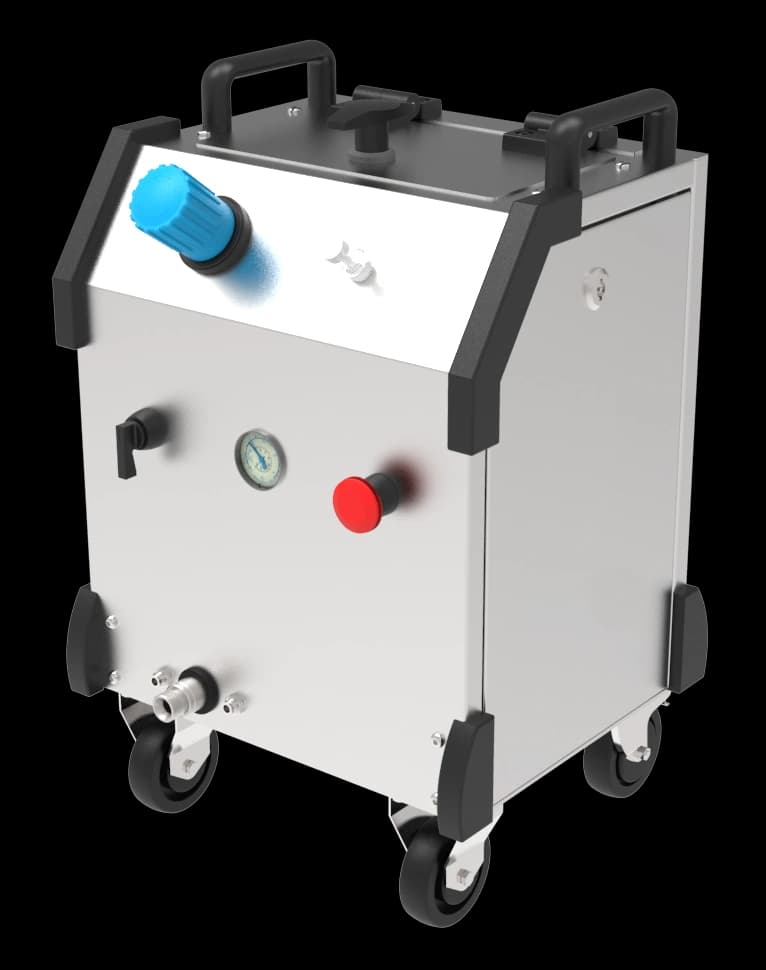
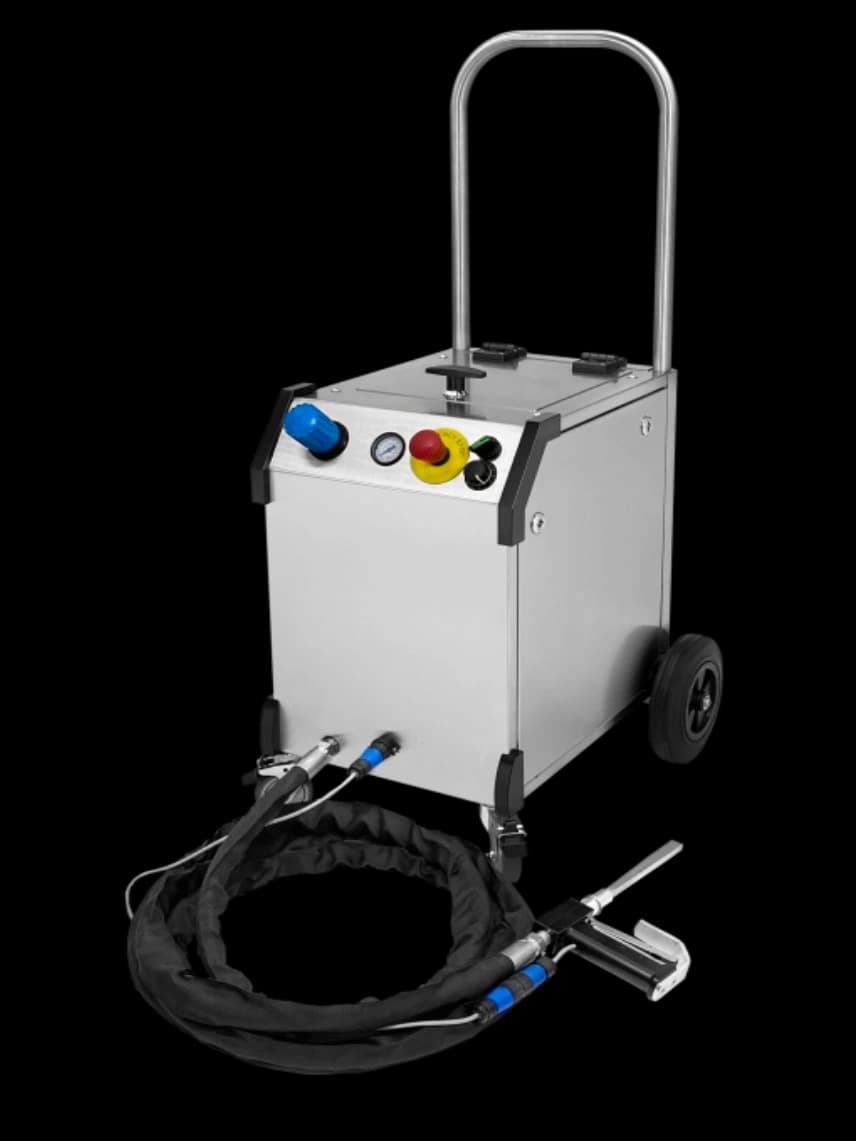
Request a fast, no-obligation quote. We’ll validate your mold sizes and vent density, recommend the right blaster/nozzles, and outline payback for your press.